My spiritual walk began in the mid-1980s, during the summers when my parents used to send my older brother and me to stay with our grandmother in Ukraine. At that time, we lived in Moscow. My granny was a member of a small Pentecostal group banned by the Soviet government. I remember those evenings when she knelt and prayed. There was a Bible that had a special place on the table. They didn't have any icons, which was typical for many families of that time. She always covered her head and was a deeply religious person.
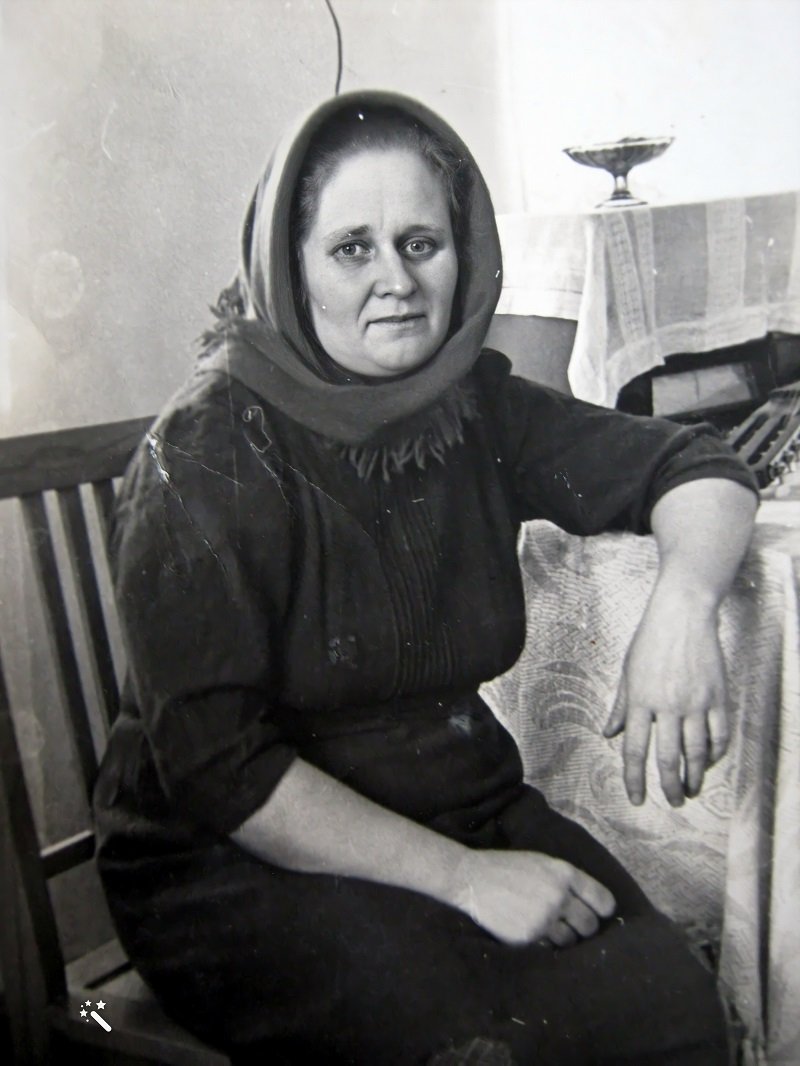
My grandmother was persecuted for her faith and belonged to the underground Pentecostal movement. She taught me to kneel and pray every evening before going to bed-and I did. I still remember the Bible stories she told me, which I found difficult to understand at the time. She often said, "God hears children's prayers." I was about ten when she gave me a small copy of the Gospel of Mark. I remember reading it every evening in bed, even after returning home to Moscow. I can't say I understood much, but I felt the book was special and sacred and that I should respect it.
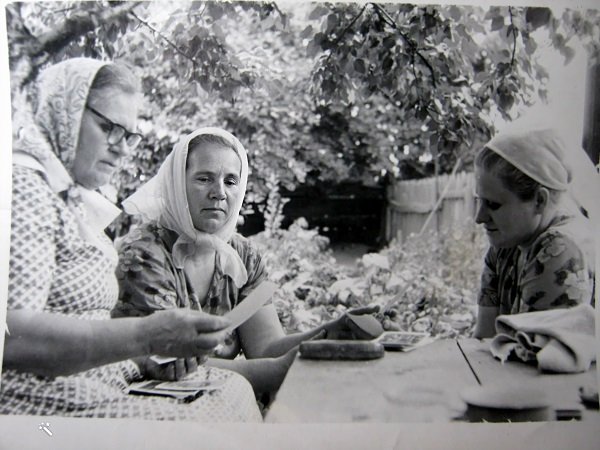
In the late 1980s, I began watching Jimmy Swaggart's sermons broadcast early Sunday mornings. Looking back, I think those were among the first televised broadcasts in the dust of the Soviet Union. I can't say exactly what drew me in, but I remember being deeply fascinated and loving it immensely.
Around that time, my mother was diagnosed with sarcoma-a broad group of cancers that start in the bones and soft tissues. She had a fast-growing tumor on the backside of her right hip. I remember my parents going from hospital to hospital, unable to find a clinic where a surgeon would agree to operate.
Eventually, she was admitted to an oncological hospital and underwent surgery. Large portions of muscle and skin tissue had to be removed. The wound was severe. My mother said she didn't think she would live past the following spring. Her own mother prayed fervently in churches. She received a prophecy that "Natasha" (my mum) would come to God. And so she did. After the hospital stay, my mother was released to go home. The doctor admitted he didn't know what kind of tumor it had been-it was the first of its kind in his medical practice.
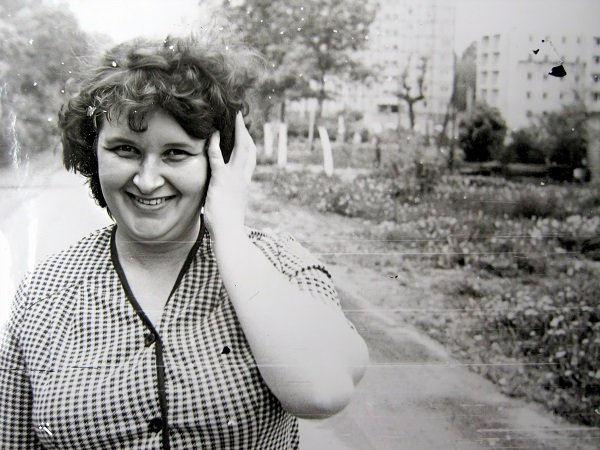
After her recovery, my mother began attending a Baptist church in Moscow. It was there that she accepted Jesus as her personal Savior. In 1991, our family sold our apartment and moved to Ukraine to be closer to my mother's parents. That year marked the collapse of the Soviet Union, the beginning of Ukrainian independence, and a period of massive economic and social crisis. Along with these changes came freedom of speech and religious expression. My mother began attending the Pentecostal church where my grandmother was a member. I was thirteen.
It was a difficult time. We bought an old, uninhabitable house. There was hyperinflation and food shortages. My parents had three children. My father worked as a firefighter and earned very little. We had no butter, oil, or sugar. My mum baked bread herself. Porridge and lenten soup were our usual meals. My father was deeply upset-furious even-that my mother started to go to a "sect-like" church. He threatened to have her stripped of parental rights. Ironically, today my father is a pastor in that very same church.
When I ask my mother whether she ever doubted God, she firmly replies, "Never." I honestly envy her faith and absolute confidence.
Gradually, both my older brother and younger sister began attending church with my mother. Since I had a close and trusting relationship with my dad, it was difficult for me to "leave" him. One day, he asked me, "So Maksym… you're with them, aren't you?" It was a hard moment, but I said, "Yes, Dad." Not long after that, he went to the church himself.
My mother had believed that when he entered the church, heard the sermon and prayers-especially amid God's presence and manifestation of spiritual gifts like the prayers in tongues and prophecies-he would be touched by God and that his heart would melt. But the opposite happened. He almost ran out of the building. He had never smoked, but there on the street, he stopped a passerby and asked for a cigarette.

It was a tough time for the whole family. Yet for me, God was real. I loved the church, the communion, the songs-and especially the sermons. I saw the preachers as people who spoke the word of God and shared divine wisdom.
In November 1991, I repented and accepted Jesus as my personal Savior. As a child, I was shy, reserved, and carried a lot of inner weight. The Christian community made me feel at home and truly alive. Faith gave my life meaning. I believed in God wholeheartedly and quickly immersed myself in church life. The church wasn't just a community-it became my world.
On Sundays, we attended a morning service in "Oktyabrsky" church, then went to "Mitrofanov" service in the nearby city of Horlivka, and in the evening to the church in our village, Panteleymonovka (Donetsk region). That was our weekly routine for the first three years of our Christian life.
In addition to sermons, I personally was particularly fascinated by the spiritual gifts - speaking in tongues and prophecy. Speaking in tongues, to me, was undeniable proof of God's presence and active involvement in His church. I prayed for that gift fervently. I knelt while collecting coal for our stove in the house, I prayed in my room, and I prayed whenever I was alone. God felt completely real to me.
During the early post-Soviet years, Christian literature was scarce. Many books were copied by hand. One such handwritten book belonged to my grandmother, and I longed to have a copy of my own. So, after school, I would sit and painstakingly rewrite it page by page. Somehow, as a young adolescent, I believed that if I finished copying the book, God would baptize me in the Holy Spirit. I nearly finished it when an old lady from our local pentecostal church, sister Olga, visited our home.

She loved to pray. We all knew that when she came, we would read from the Bible and pray together. She was always smiling and encouraged us with verses from the Scripture. She prayed a lot with us and prophesied frequently. We loved her dearly.
That day, we knelt in prayer. Then I felt as she approached me from the back and laid her hands on my back. At that moment something overwhelming happened to me. I physically felt what I believed was the power of God and what I thought meant to be "filled" with the Holy Spirit. My tongue began to move differently, and I started speaking in a clearly distinct, audible utterance or even a language, as I thought. I was filled with joy. I was different. I knew I had been baptized in the Holy Spirit.
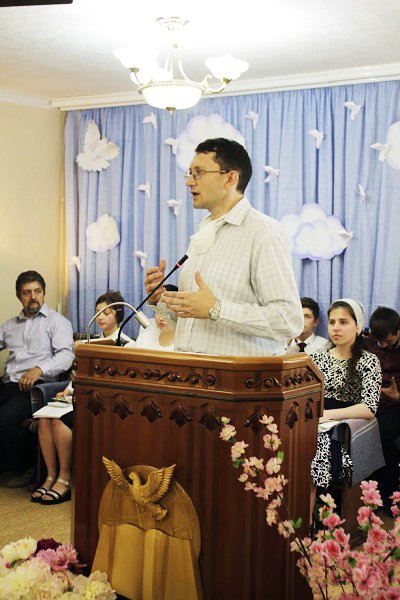
We used to attend one small local church in our village, Panteleymonivka. That small group, mostly old people, didn't have many members, and it followed an old Pentecostal tradition: brothers (men) were expected to share brief messages or short sermons during services. Starting from the age of fourteen, I was given the opportunity to preach short, ten-minute sermons. This required preparation. I learned to use different sources - Bible commentaries, and Russian language dictionaries like Ozhegov and Dahl's - to understand the meaning of words and the Scriptures.
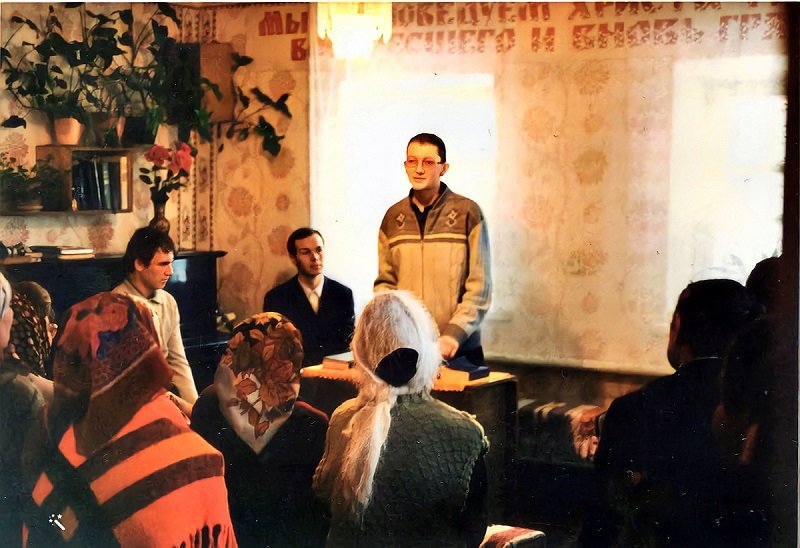
From that time on, I had a clear sense of purpose: I wanted to study at a Bible college and become a preacher.
From about the age of eight, I began to experience regular, serious stomach aches. I was soon diagnosed with a duodenal ulcer. A significant part of my adolescence was marked by frequent and sometimes severe pain-during the day and often at night. I was hospitalized several times, but treatments were not truly successful, as the condition kept returning.
By the end of high school, my health had seriously deteriorated. I was bedridden most of the time and would vomit almost everything I ate. The summer of 1995 was especially difficult because of excruciating night pains. I wanted to sleep, but it was nearly impossible. One night, my mum came upstairs and saw me lying there with my eyes open. She said, "I thought you had died."
I prayed a lot. My parents asked many churches to pray for my healing, but nothing seemed to help. By then, due to years of recurring ulcers and resulting scar tissue, the passage from my duodenum into the intestines had nearly closed.
I still clearly remember one particular night. In the midst of unbearable pain, I opened my Bible, and my eyes fell on Luke 18:1: "Jesus told them… they should always pray and not give up." With all due reverence to the Scriptures, it felt almost like a bad joke. I also understood I had become a burden to my parents, who were helpless to do anything for me.
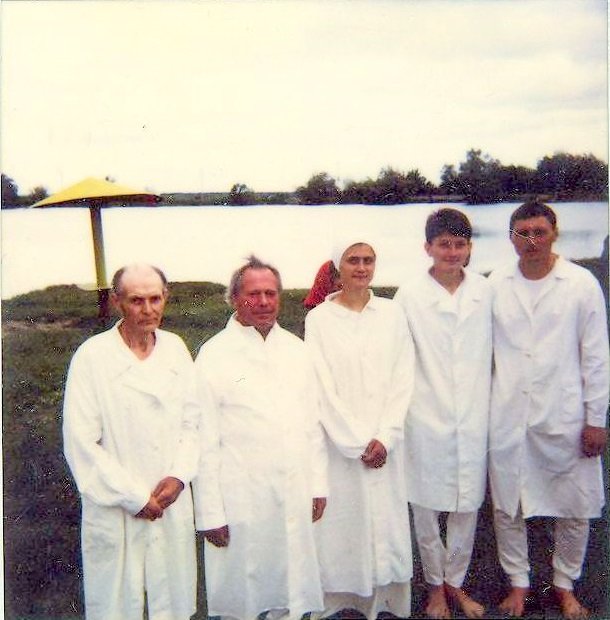
One of the members of our church shared a prophecy she had received-a vision: "A man in white comes to me, cuts open my abdomen, and I stand up and walk." Shortly after, I underwent surgery: a resection of two-thirds of my stomach.
After the operation, my father was waiting for me in the hospital. He later told me that, as I was being wheeled into the postoperative ward, I was speaking in tongues and praying, "Abba, Father." I was completely unconscious at the time.
A woman in the same ward, who was caring for her own son, said to my dad, "People come out of anesthesia in different ways-some sing, some say swear words. Yours is speaking a foreign language."
Later I thought that I had never actually used the words "Abba, Father" in prayer before. For me, that was a sign: I was still His child.
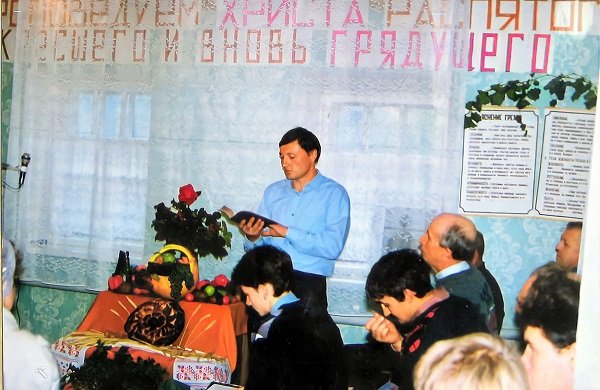
When I was around seventeen, my central church pastor, Aleksander Ilchenko, gave me access to approximately 120 cassette tapes of the School of Christ teachings, by Bert Clendennen. I was thrilled. I listened to and re-recorded all of them using my old tape recorder. I was hungry to learn more. I also studied the Bible through correspondence courses offered by the Emmaus Missionary Organization.
At the age of nineteen, I received my parents' permission to attend Bible college. I absolutely loved it. It was one of the most fulfilling periods of my life. I studied with passion and great satisfaction. I read, memorized, and wanted to know everything about God and my faith. I deepened my knowledge academically, hoping to find all the answers. I studied diligently, and by the end of the first year, I was recognized as the best student and awarded a scholarship for the following year.
After that, I was assigned to lead a church in a small village - Malaya Ofirnaya. I wasn't ordained but served as acting pastor, filling in for Nikolay Sychev who oversaw several churches at the time. I served there for a year. Then I was asked by my academic dean, Sergey Flugrant, if I would like to go to the UK to continue my theological education at Regents Theological College. Of course, I agreed. I am confident that studying at Regents Theological College (RTC) became the most significant and transformative experience of my life since my conversion.
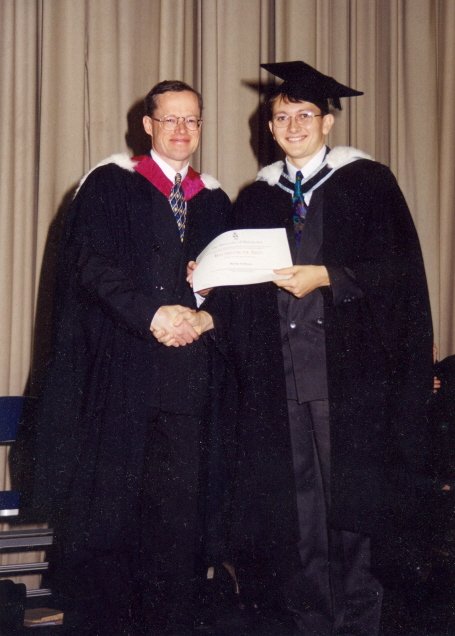
It was there that I truly learned to think critically and analytically. The education I received was deeply informative, enriching, and liberating. I loved every single part of that time. It changed me. I learned to approach theological reasoning with honesty and intellectual integrity. I am particularly grateful to my teachers: Keith Warrington, Neil Hudson, William Atkinson, and Julian Ward. Later, I would pass on these same principles to my ESL students - helping them think logically, question assumptions, and develop clarity in their communication. Throughout the years that followed, I continued attending various educational courses, training and workshops, always hoping to find something as transformational as my experience at RTC. I never did. Nothing ever came close to that academic and spiritual depth.
Having completed my BA in Applied Theology, I entered a Master's program focused on Pentecostal and Charismatic studies. Upon returning to Ukraine, I taught several theological disciplines, including Systematic Theology (Bibliology, Theology Proper, Christology, Pneumatology, Anthropology, Soteriology, Ecclesiology, Angelology, and Eschatology), Apologetics and Ancient Hebrew.
All those years, starting from the age of 14, I was searching for answers. I believed that if I just studied deeply enough-just one step further-if I mastered the Bible, church history, doctrine, exegesis, and even ancient Greek and Hebrew, then everything would make sense. The pieces would click into place. All the seeming contradictions would dissolve. But the more I studied, the more questions I had. The deeper I went, the more inconsistencies I saw. I didn't want to manipulate Bible verses to 'stretch' and support a certain belief. I couldn't fake inner feelings and personal convictions. I wondered whether my faith was just one of many belief systems that humans have developed over the last 60,000 years. Combined with personal hardships - including my own history of pain, my son's cancer diagnosis and other family struggles - my questions deepened: Who was the historical Jesus? How was the Canon formed? What about the Trinity? Why did God not intervene in moments of desperation? How real was my personal relationship with God?
Eventually, I reached a point where I felt I could no longer teach theology. Not because I didn't love it-I loved my subjects, I loved my students, and I loved what we had in the classroom. It had been my dream job. But I had so many deep and unresolved questions about God, Christianity, and faith, that I could no longer stand before others and teach what I was no longer certain of. It felt dishonest. I didn't want to risk misleading anyone.
Slowly, I withdrew from church-not out of rebellion, rather out of confusion and disorientation. There were times when I cried out to God for help and guidance, and yet… there was silence. I couldn't pretend anymore. I needed time to search, to wrestle (maybe), and to be honest-with God and with myself.
In 2005, I left the Bible college and spent about six months working as a researcher at the Euro-Asian Accrediting Association (EAAA), studying the effectiveness of theological education in Ukraine.
After that, I founded my own language school in Kyiv. I stopped being a regular churchgoer. I put my energy into building a "personal life" philosophy. Over the years, I expanded my knowledge in psychology, philosophy, business, second language acquisition, and software engineering. Professionally, I was relatively successful as an educator and language instructor. I was active in professional communities, built a profitable business, and received positive feedback from students and clients. But I never again found a space that felt like a church. That space had made me feel alive. It was the place where I felt truly myself-surrounded by people who shared my deepest values.
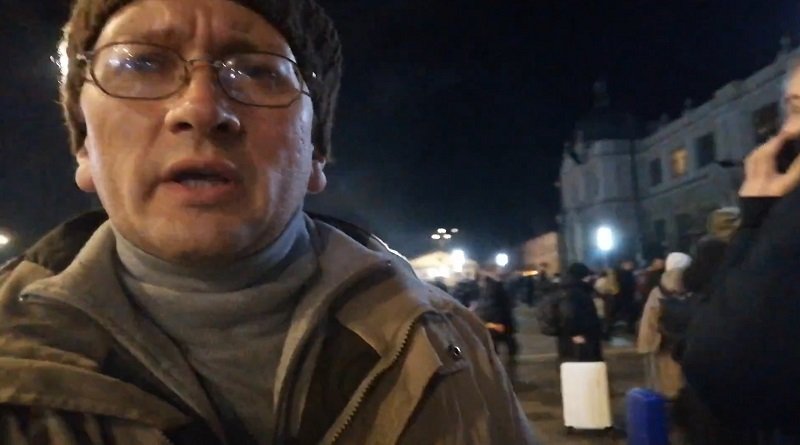
Yet, although I was no longer an active church member, I think I never stopped being a Christian. I continued to live according to Christian moral standards. I feared God. He remained at the very center of my values. My wife would sometimes call me a "Pentecostal," not in reference to my beliefs, but because of my lifestyle and moral standards. I still feared God. I prayed-especially in moments of crisis-even if those prayers seemed to go unanswered. Strangely, I lived by Christian ethics, even if I couldn't articulate my faith as I once did.
Gradually, I came to understand that Christianity was the only answer that made sense of my deepest existential questions. It was the only framework and construct through which I could explain my sense of moral certainty-that some things are right and others wrong. Not just socially or culturally-but deeply, right or wrong.
After almost two decades, I felt a deep need for God — especially after what my family and I went through following the outbreak of the war in Ukraine: our forced relocation and several personal life crises. I found myself praying again. I felt cornered and under extreme pressure. It seemed like a deadlock, and I didn’t know what to do. I was searching for at least some inner clarity or guidance — a sense of what the right or most appropriate decision or solution might be. God was the only one I could turn to. One morning, my younger son told me that I had been praying and speaking in tongues in my room during the night. I knew I had been asleep. Some might see it as a subconscious brain reaction to stress during sleep. However, to me, it was a sign - even though I thought God had left me, He was still there for me.
I read Scripture. Somehow, these are the only things that bring real peace to my heart. I long for a personal encounter with God. I've come to realize that what I seek is not so much theological clarity as His presence. I now fully acknowledge that I cannot live without God. My life feels incomplete without Him, as if something essential is missing-something I can't quite name or describe. There's a place deep within me that only He can fill.
I no longer wanted to just intellectually explain God-I wanted to experience Him. I needed His presence. I needed His guidance. For four years, I managed and curated a website focused on Pentecostal teaching. It included songs, historical materials, regular Bible reading plans, commentary on hymns, and reflections on biblical texts. I gradually came to understand that Christ's teaching is the only adequate and sufficient answer to my most profound questions.
I see now that God had never left me. His principles were always inside me, guiding my thoughts, decisions, and sense of right and wrong. I simply needed to acknowledge this truth. I came to see that He didn't need to be "proven" or "explained." He was-the source of meaning, peace, and purpose. His presence brought confidence. His love brought clarity.
God continued speaking to me through His Word. Scripture, once again, became alive within me. I now humbly recognize my own limitations and inadequacies when it comes to explaining or fully understanding God's plan. But I also recognize that I don't need to have all the answers to trust in His reality.
Crises test one's worldview more than anything else. And I personally believe that no human psychological or philosophical construct is sufficient or strong enough for me without God.
Перейти к странице